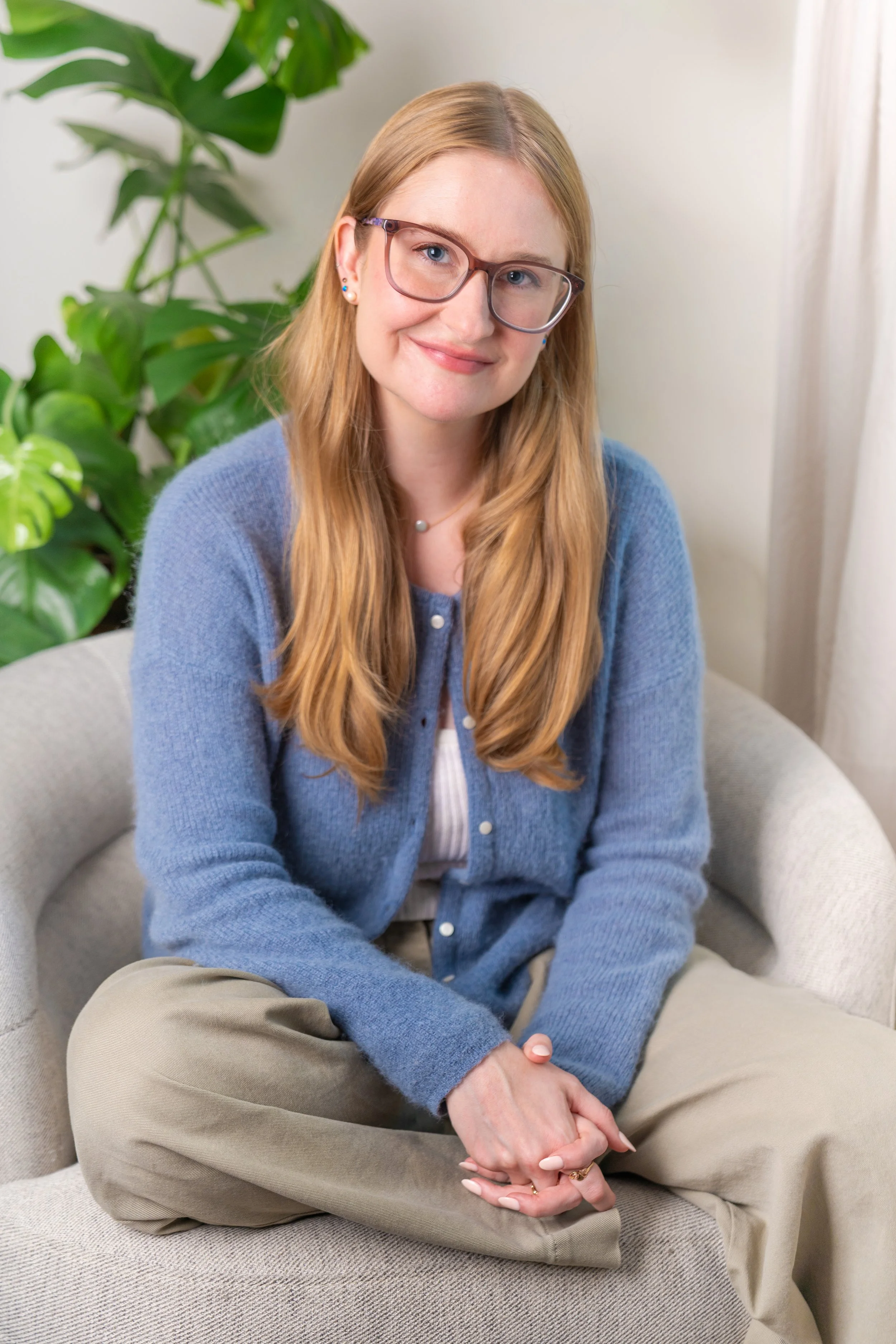
Hi, I’m Kate.
Pronouns: She/Her
My career began when my grandmother gave me a book about Frida Kahlo. I was fascinated with how her art helped her re-build a sense of purpose in the wake of grief and suffering. The art became a vehicle for her to challenge oppression, accept her body, and re-define beauty, themes I get to explore with clients every day.
After getting a M.A. in Art Therapy, I completed my residency at an eating disorder treatment facility, where I became passionate about the complexity and beauty of recovery. I noticed that art could be an adaptive strategy for practicing recovery skills, such as challenging perfectionism and embracing uncertainty. Art and food are both sources of nourishment, and through them we can experience joy and fulfillment.
I began private practice several years ago, and I’m honored to provide the quality and expertise of higher level treatment at a private practice level of care. I’ve found that my clients are my greatest teachers - they continue to expand my perception of healing; and together we carve out peace and joy in a world that is desperate to restrict and oppress. I might be a good fit for you if you've ever struggled to nourish yourself, accept your body, or see it neutrally. I bring encouragement and energy to therapy, and will provide a space where you can fall apart, rest, and re-build yourself again.
When I’m not on the clock, I love traveling to new places with friends. I enjoy baking elaborate cakes, thrifting a steady supply of sweater vests, and pestering my cats - Fig and Newton.
Qualifications

-
Master’s in Art Therapy & Mental Health Counseling
The George Washington UniversityBachelor’s in Art History, Minors in Psychology & Studio Art
University of North Carolina at Wilmington
-
Licensed Professional Counselor
#0701011872
Virginia Board of CounselingNational Provider Identifier
#1811611031
National Plan and Provider Enumeration System
-
Board Certified Art Therapist
#21-178
Art Therapy Credentials BoardApproved Clinical Supervisor
Virginia Board of Counseling
Testimonials
Eating Disorder Dietitians
-
“Kate is a thoughtful, kind, and funny therapist who can connect with folks on such a deep level. I love collaborating with her as I can always trust her clinical judgement and her empathetic nature. She makes therapy safe and accessible for our clients, and makes my job as the dietitian so much easier!”
-
“I’ve had the privilege of collaborating with Kate for over a year and a half. During this time, I’ve witnessed not only her exceptional skill as a therapist but also her unwavering care and compassion for her clients. The work of an eating disorder therapist is complex, yet Kate approaches even the most difficult conversations with grace and empathy. As a dietitian, I deeply appreciate how thoughtfully she keeps me informed about her therapeutic progress with our shared clients. She truly fosters collaboration, working together to identify the best ways to support her clients while maintaining a clear and effective leadership role within the treatment team. Whether you are a client or a referring provider, you can trust that Kate will meet you with competence, sincerity, and genuine dedication. I cannot recommend her highly enough.”
-
“Kate is an incredible therapist I have had the pleasure of working with for about 5 years. Kate is thorough, compassionate, and creative in her work with her clients. She creates a welcoming space due to her warm and inviting nature. I feel confident that individuals working with Kate will receive the absolute best, high-quality therapeutic care.”
Eating Disorder Therapists
-
I have had the pleasure of getting to know Kate personally and professionally over the past several years, and have consistently found her to be a compassionate and talented therapist. I highly recommend her to clients seeking a knowledgeable and caring provider, as well as to colleagues seeking a trustworthy referral source. I look forward to continuing to collaborate with—and learn from—Kate!”
-
“I highly recommend Kate! Her compassionate and creative approach helps clients explore emotions, improve body image, and build a healthier relationships with food in a safe, supportive space.“
-
Kate is incredibly knowledgeable and creative in her therapeutic work. She really cares about meeting her clients where they’re at and helping them in the way that works best for them. Her warm and authentic therapeutic approach really helps her clients grow and I can’t recommend her enough."
Art Therapists
-
“Kate has been a trusted colleague of mine for several years. She is a dedicated and caring therapist with exceptional clinical skills. I highly value her knowledge of eating disorders and she is one of my top referrals for that focus area. She is always open to collaborating and constantly works with other providers to make sure her clients receive the best care. Kate brings creativity, compassion, and curiosity to her work which benefits her clients by allowing them a space where they are truly seen. I highly recommend her and am grateful to have her as part of my community.”
-
“Kate is an amazing therapist who meets her clients where they are and supports them to move toward their goals with creativity, empathy, and honesty. Kate works passionately within a HAES framework and has a wealth of resources to share with clients.”
-
“I've watched Kate grow from a curious student into a confident, capable therapist. She cares deeply about her work and always wants to learn something new. You're in good hands with Kate - she is a kind and dependable person on your team!”
Professional Collaborations
“We Are Everyone” Podcast
American Art Therapy Conference
Why a thistle?
Thistles are symbols of strength and resilience across many cultures. Despite the thorny inconvenience they pose for human agriculture, thistles are vital for wild ecosystems. We know that bees, butterflies, and birds rely on thistles for shelter and sustenance.
I think we have a lot we can learn from thistles. In a world where it can be so difficult to thrive, we develop protective layers to cope. The work of therapy is about understanding your layers, opening the layers, and then pollinating that self-knowledge into your life.
I think Robin Wall Kimmerer explains it perfectly, “in the Western tradition there is a recognized hierarchy of beings, with, of course, the human being on top… and the plants at the bottom. But in native ways of knowing, human people are often referred to as ‘the younger brothers of creation.’ We say that humans have the least experience with how to live and thus the most to learn… we must look to our teachers among the other species for guidance…. they’ve been on the earth far longer than we have been, and have had time to figure things out.”